The short answer
- A mockup sells; a proof approves. They are different documents
- Size and placement must be accurate or the mockup creates a dispute
- Show the real garment colour, not a generic template
- Two or three options convert better than one, and better than six
- Speed matters more than polish — the first supplier to respond usually wins
Between a quote and an order there is usually a mockup, and it does more work than the quote does. A price is abstract; an image of the customer's logo on the garment they were imagining is not, and it converts enquiries that a spreadsheet never would.
It also carries risk. A mockup showing a print larger than you intend to produce has made a promise, and the customer will hold you to the picture rather than to the dimensions written underneath it.
What a mockup is for
Its job is to help somebody decide. It answers three questions the quote cannot: what will this look like, will it suit us, and is it worth the money.
A good mockup lets the customer
- See the design at roughly the size it will print
- Judge it against the actual garment colour
- Compare placements or colourways side by side
- Show it to somebody else who has to approve it
- Picture the finished thing rather than imagine it
That fourth point is worth designing for. Most group orders are approved by a committee, a head teacher or a manager who was never part of the conversation, and the mockup is what travels to them — so it should make sense with no explanation attached.
The mockup is the only part of your quote that gets forwarded. Make it able to stand on its own.
Accuracy
The single rule: never show something you do not intend to produce. An oversized print in a mockup is not flattering, it is a future argument.
| Must be right | Why |
|---|---|
| Print width | The customer is judging scale, not just design |
| Placement | Chest height and centring read strongly |
| Colour count | Extra colours change the price |
| Garment colour | The same ink reads differently on each |
| Decoration method | Embroidery does not look like print |
Write the dimensions on the mockup as well as showing them. "Front print 280mm wide" beside the image removes ambiguity for nothing, and it converts the mockup into something that can be checked later against what arrived.
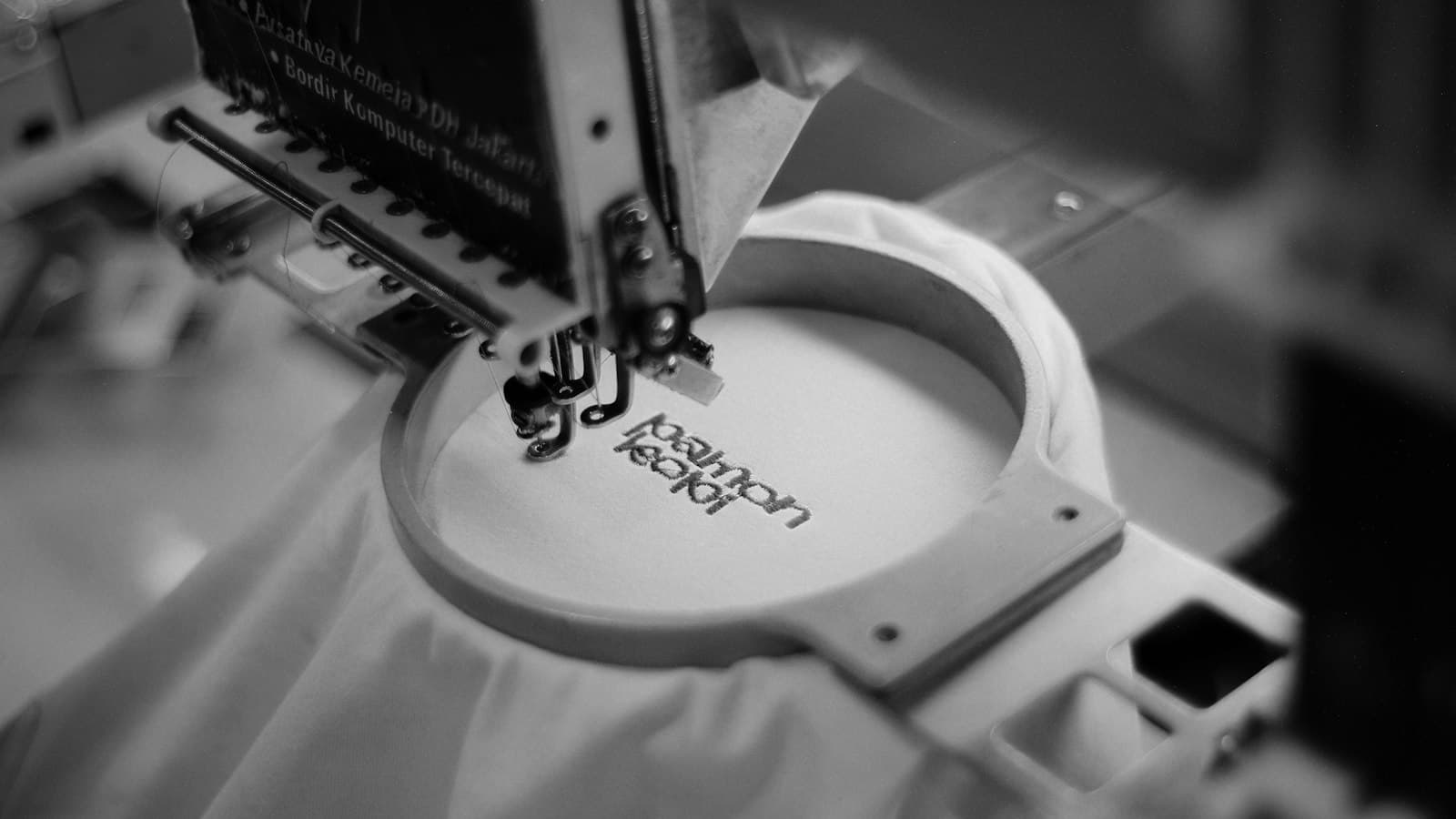
Embroidery mockups need particular care, because a flat vector logo dropped onto a garment does not look like stitching and sets an expectation the machine cannot meet. Show a stitch simulation where you can, and where you cannot, say so — the reasons are in why a logo that prints well may not embroider.
The garment
Use the real style in the real colour. A generic white tee template makes every mockup look the same and hides the thing the customer most needs to see.
What a good garment image gives you
- The correct silhouette — a hoodie is not a tee with sleeves
- The actual colourway, matched to the supplier's swatch
- Visible details: collar, pocket, zip, seams
- Consistent lighting across your whole range
- Enough resolution to enlarge without falling apart
Most suppliers provide product imagery to account holders, which removes the photography problem entirely. Build the library once, keep it organised alongside your artwork store, and every future mockup is assembly rather than production.
Showing options
One option asks for a yes or a no. Two or three ask which — a better question, and one that moves the conversation past whether to order at all.
Worth offering
- Two garment colours
- Front only, versus front and back
- A one-colour version beside the full-colour one, with both prices
- Two placements where the design allows
- The same design on a tee and on a hoodie
Keep it to three. Six options do not flatter the customer, they postpone the decision — and a group that cannot agree stops replying entirely.
Pairing options with prices is what turns a mockup into a sales document. Showing the simplified single-colour version alongside its lower price frequently sells the cheaper option to the customer's benefit and yours, since it is also the easier job to run.
Speed
A mockup that arrives the same day beats a better one that arrives on Thursday. Customers enquiring with several shops usually order from whoever made it easy first.
Making it fast
- Template files per garment style, ready to drop artwork into
- A maintained library of garment images by colour
- Saved placement guides at standard sizes
- A fixed layout so nothing is designed from scratch
- Anyone in the shop able to produce one, not just the art person
The last point is where most shops lose time. If mockups require the one person who knows the design software, they queue behind that person's other work, and enquiries go cold waiting.
Automating it removes the queue entirely. Product visualisation that renders the design onto the actual garment means a mockup is produced when the enquiry arrives rather than when somebody is free, and where customers place their own designs through an online design tool they build the mockup themselves as part of ordering.
Mockup or proof
| Mockup | Proof | |
|---|---|---|
| Purpose | Sell the idea | Approve production |
| Stage | Before the order | After it |
| Detail | Indicative | Exact — sizes, colours, positions |
| Signed off | No | Yes, in writing |
Confusing the two is a common and expensive habit. A mockup treated as an approval means production runs against a sales image, and the differences between the two surface only when the boxes are opened.
Issue a separate proof once the order is placed, with everything specified and a written approval recorded against the job. The proof process is what protects you; the mockup is what wins the work.
Common mistakes
Avoid
- Prints shown larger than they will be produced
- A generic template instead of the actual garment
- Colours that your ink cannot match
- Photographic effects — shadows, textures — that imply detail you will not print
- Sending six variations at once
- No dimensions written anywhere
- No shop name or date on the image
The last one costs orders quietly. A mockup forwarded around a committee with nothing identifying who made it gets discussed, approved, and then attributed to whichever supplier is easiest to find — put your name, the date and a reference on every one.
Keep every mockup you send against the customer record. When the same group comes back next season, the fastest possible response is the previous mockup with a new date on it, and that speed is frequently what secures the reorder. The rest of the artwork archive assumes the mockup showed what you actually intended to print.