The short answer
- The pallet sets the maximum print area and how flat the garment sits
- Three sizes cover most work: standard adult, youth, and a small one for sleeves and pockets
- Specialty pallets are what let you quote caps, sleeves, pockets and bags
- Adhesive failure is the cause of most registration problems blamed on the press
- Smaller heat press platens prevent the box outline on layered garments
Pallets are the least interesting purchase in a print shop and one of the more consequential. They determine the largest print you can produce, whether the garment lies flat enough to register, and which products you can decorate at all.
Shops routinely own one size, print everything on it, and attribute the resulting problems to the press.
Why the pallet matters
Three things follow from it. The print area cannot exceed what the pallet supports, because the screen needs something firm behind the fabric. The flatness of the garment determines whether the print lands where the proof said. And what the pallet fits determines which products you can take.
The first is the one customers run into. A design intended to reach the edges of a shirt cannot be screen printed on a standard pallet, because the pallet has to fit inside the garment — which is why designing for the print area rather than the artboard matters.
Sizes worth owning
| Pallet | Use |
|---|---|
| Standard adult | Most front and back prints |
| Oversize / jumbo | Large fronts and full backs on bigger sizes |
| Youth | Children's garments — an adult pallet distorts them |
| Small / sleeve | Sleeves, pockets, small placements |
| Wide | Across-chest designs, and bags |
Three is the practical minimum for a shop doing mixed work: standard, youth and small. Printing a youth garment on an adult pallet stretches it, so the print lands correctly on a stretched shirt and sits wrong when it relaxes — a fault that appears after delivery and looks like carelessness.
The small pallet is what makes sleeve and pocket work possible at all. Attempting a sleeve on a full pallet means the rest of the garment is in the way, and the result is inconsistent placement at best.
An adult pallet under a youth shirt prints on a stretched garment. It looks fine until it relaxes.
Specialty pallets
Each one is a category of work you can quote for. They are not accessories so much as capability.
| Pallet | Unlocks |
|---|---|
| Sleeve | Sleeve prints, common on team and event work |
| Pocket-area prints without pressing through | |
| Cap | Cap fronts — a curved surface needs its own fixture |
| Leg / trouser | Joggers and shorts |
| Bag | Totes and holdalls, which do not lie flat |
| Youth jumbo | Large prints on smaller garments |
Buy them when the work exists rather than in anticipation. Each occupies storage and each is only worth owning if it is used — but the reverse is also true: declining sleeve prints because you have no sleeve pallet is turning down work for the cost of one accessory.
Adhesive
The most common cause of registration problems, and almost always diagnosed as something else. If the garment moves on the pallet between colours, the colours will not line up — no amount of micro-registration fixes a shirt that is sliding.
Getting adhesive right
- Use enough — a garment should resist being lifted at the edge
- Reapply on a schedule, not when prints start misregistering
- Clean the pallet properly before reapplying; layers build up
- Water-based adhesive for most work; web spray for heavier fabrics
- Let spray adhesive tack off before loading — wet adhesive transfers
- Watch for adhesive on the garment face, which shows after curing
Pallet tape is worth having alongside. It protects the pallet surface, it is quicker to replace than cleaning off built-up adhesive, and it keeps ink off the pallet — which otherwise transfers onto the inside of the next garment.
Heat press platens
The same principle applies to a heat press, and interchangeable platens matter more than most shops realise.
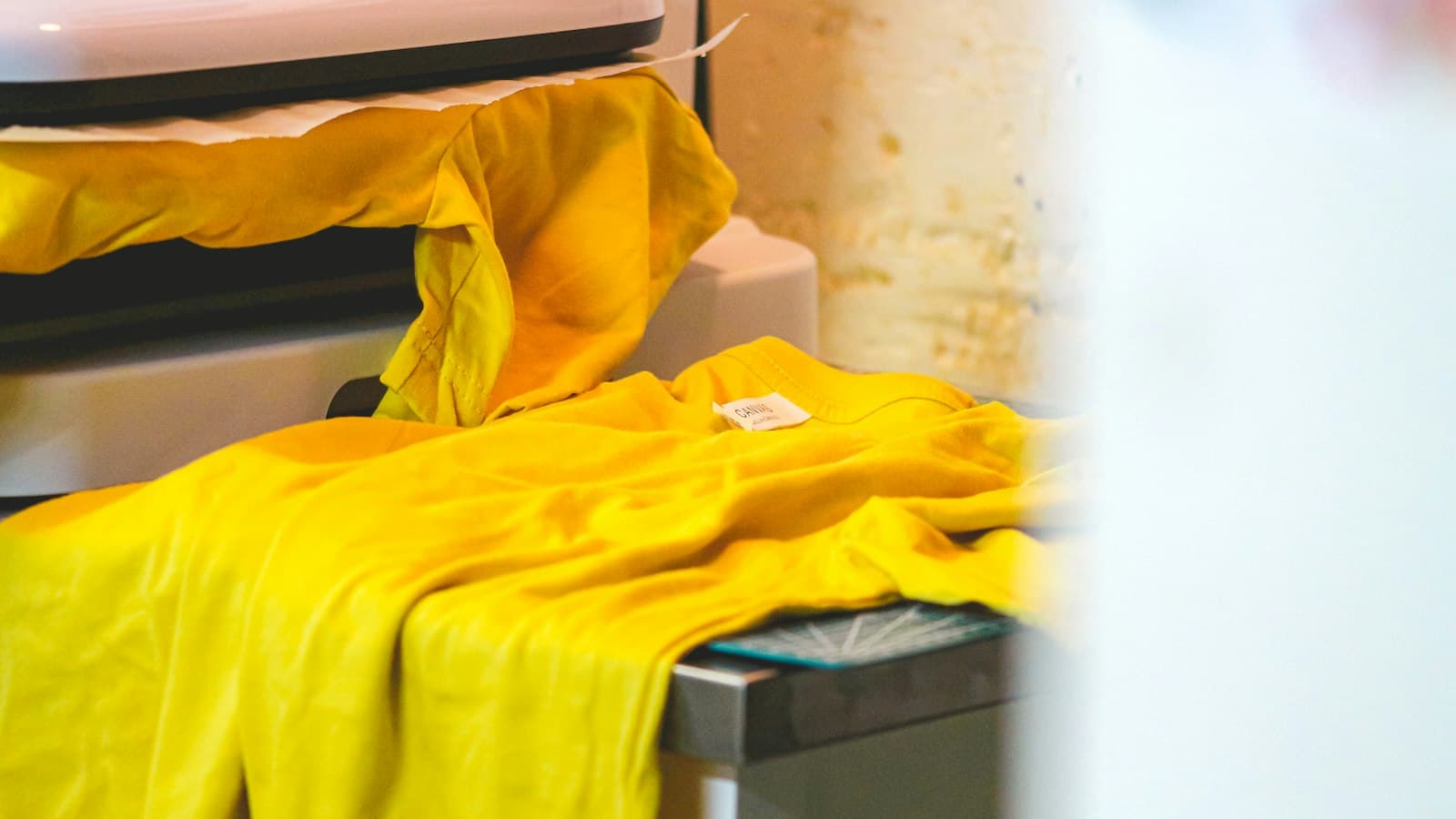
A full-size platen presses through the whole garment. On a hoodie that means pressing the back as well as the front, and on anything with a layer beneath — a pocket, a placket, a lining — you get the visible box outline everyone recognises.
A smaller platen reaches inside a sleeve, into a pocket area or onto a youth garment without pressing anything beneath it. If you run DTF transfers or vinyl on mixed garments, that is the accessory that removes the most common complaint.
Reset pressure whenever the platen or the garment thickness changes. A press set correctly for a tee is under-pressured on a hoodie, and that is where transfers lift at an edge.
Care and replacement
Pallets wear, and a worn one degrades print quality in ways that are hard to attribute.
Check periodically
- Flatness — a warped pallet cannot register consistently
- Surface condition — gouges and lumps print through
- Adhesive build-up, which alters the height and the surface
- Mounting — that the pallet sits square and does not rock
- Heat press platen covers, which degrade and mark garments
Warping is the one to catch. A pallet that has been heated repeatedly — by flash units in particular — can distort slightly, and a pallet that is not flat will produce registration problems on every job it touches until somebody thinks to check it.
Put it on the monthly list alongside the press itself. Pallets are cheap to replace and expensive to keep using once they have gone, and the failure is gradual enough that nobody notices until a job goes visibly wrong. The rest of the equipment archive assumes the garment is flat before you blame the press.
Storing them so they get used
A specialty pallet that is hard to reach is a pallet nobody swaps to, and the job gets run on whatever is already mounted. That is how a shop owns a sleeve pallet and still prints sleeves badly.
Rack them near the press, visible and labelled, so changing takes a minute rather than a search. Where a pallet needs a specific mounting bracket, keep the bracket with it — a hunt for a fixing is what turns a one-minute change into a decision not to bother.
Keep a note of which pallet each recurring job uses, alongside the mesh counts and ink colours. A repeat that runs on the same pallet as the original produces the same placement, and a reorder that quietly used a different one is a difference the customer will see.